
Home Blog Page 56

The Ultimate Overland Vehicle – A Winnebago Revel Owner’s Perspective

SPRINTER, Van life, revel4x4, winnebago, adventure van, vehicle supported adventure, gnar wagon, overlanding, over land, off-road, off-roading, vehicle supported adventure,

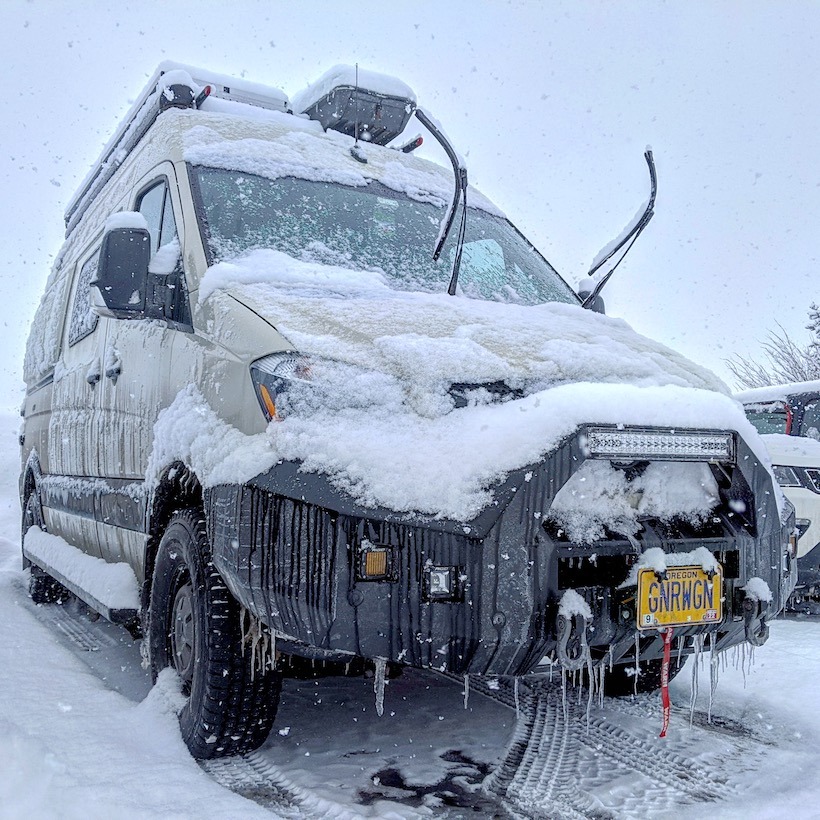
2018 Winnebago Revel – The Gnar Wagon

David Somach and Kelly Laustsen, Owner’s of “The Gnar Wagon”.

Why did you choose your rig platform and how long have you had it?

We chose the Winnebago Revel because we were planning a 1+ year sabbatical of full-time travel, and wanted all the creature comforts that a van can provide. We also considered building out our own van, but realized we didn’t have the time (or skills!) and wanted to be able to start traveling as soon as we got our van. We had a few non-negotiables, including 4×4, a toilet and shower, seating for four, and ability to fit into a standard parking space. The Revel met these requirements and then some! We’ve owned our van for a little over three years now.

SPRINTER, Van life, revel4x4, winnebago, adventure van, vehicle supported adventure, gnar wagon, overlanding, over land, off-road, off-roading, vehicle supported adventure,

What mods have you done to it and why? 

Where do I start! The most significant modifications were to add Backwoods Adventure Mods gear all around, to upgrade the battery system to lithium through RoamRig, and to add extra solar panels on the roof. Most of our modifications are either to enable us to get further into the wilderness, or to extend the amount of time we can go before having to return to civilization. Our Revel was nearly where we wanted it from the factory, but we wanted a little extra toughness from the Backwoods bumpers, as well as an easy way to mount a winch and lighting. We installed an onboard air setup to be able to reinflate the tires after airing down on rough roads, and found that the front and rear bumpers were great locations to mount air hookups. After heavy use, our stock AGM batteries were showing their age so we went with a lithium upgrade that was a total game-changer in how we can use the van’s appliances. The extra solar is a nice boost especially in the summer, and allows the batteries to quickly recharge while we’re playing outside.

SPRINTER, Van life, revel4x4, winnebago, adventure van, vehicle supported adventure, gnar wagon, overlanding, over land, off-road, off-roading, vehicle supported adventure,

What would you do differently if you could start from scratch?

Honestly, not much. We most likely wouldn’t have ended up with an off-road van if we were selecting a rig for weekends and shorter trips, but now that we have the van, we’ve gotten a bit soft! It’s so nice to be able to access the living area during a long drive without having to go outside, especially if the weather is foul. Now that we’re in Alaska for the summer, having a hard-side camp setup is great for peace of mind when we’re deep in grizzly country. We originally were planning on building out our own 4×4 Sprinter, but after ending up with a Revel, I’m not sure if we’d make any changes to the floor plan if we were to build out our own in the future. While we’d love to have a bigger bed or refrigerator, it would be tough to find the extra room needed for that in a short-wheelbase Sprinter and would require a switch to a 170 (long wheelbase). We think that the parking and maneuverability benefits of the short wheelbase van far outweigh the space constraints! We do wish we’d done a few upgrades before traveling full time in the van, including the switch to Lithium batteries (which we did before our trip to Alaska) and a suspension upgrade, which we still haven’t done. While our van does a great job on tough forest roads and airing down the tires helps a lot, we have spent a lot of time slowly creeping along on washboard roads!

SPRINTER, Van life, revel4x4, winnebago, adventure van, vehicle supported adventure, gnar wagon, overlanding, over land, off-road, off-roading, vehicle supported adventure,

What’s the one (or two) thing(s) that make your rig awesome for you?

I never fail to smile when I’m creeping up a tough section of forest road and notice the down comforter on the bed and my wife’s artwork on the cabinets in the rearview mirror. The 4×4 van is pretty unique since it’s capable enough to get you to some pretty rugged places, but has the ability to carry all of your luxuries from home inside!

What’s not so great? What characteristics or components would you change if you could? 

No matter how good of tires you upgrade to or what you do to upgrade your suspension, you can’t beat physics and a 9000 pound van just isn’t as capable as any of the other rigs in this Ultimate Overland Vehicle Series. It is pretty incredible where we’ve been able to go, but you need to accept that you will see some sections of road that would be no issue for a kitted out Jeep, but will cause you to have to turn around.

SPRINTER, Van life, revel4x4, winnebago, adventure van, vehicle supported adventure, gnar wagon, overlanding, over land, off-road, off-roading, vehicle supported adventure,

Final thoughts and words of wisdom when choosing an overlanding adventure rig?  

Like any purchase, I think the first thing to do is to identify the use case. The rigs in this Series are just overland and off-road capable tools, and there are good tools and bad tools for the job. Are you a weekend warrior who just wants to get away from the crowds and have an upgrade from a tent? Maybe you just need a truck and a topper with a platform inside. Do you want a no-compromises off-roader and will only go when the weather is ideal so you don’t need to account for cold or foul weather? A kitted out Jeep with a no-frills camping setup might be what you want. We wanted a shower, a comfortable bed, and an indoor cooking area since we have stints of full-time travel, so a van was the best option for us. Once you determine your need, it’s a great idea to rent a rig or two to get a better idea of what it’s like to drive and live in, as no amount of research can replace experience. Finally, make sure to get out and use your setup before doing any major upgrades! Different people have different needs, and the best way to identify what upgrades you want is to use your rig and see where it comes up short from your expectations.
SPRINTER, Van life, revel4x4, winnebago, adventure van, vehicle supported adventure, gnar wagon, overlanding, over land, off-road, off-roading, vehicle supported adventure,

Check out The Gnar Wagon Youtube Channel HERE

Check out The Gnar Wagon Instagram Page HERE

__________________________________________________________________
Check Out The Ultimate Overland Vehicle Series HERE

Power Wagon- An Owner’s Perspective

PowerWagon, four wheel camper, pop up camper, FWC, hawk camper, overlanding, over land, overland, off-road, off-roading, off road, vehicle supported adventure,

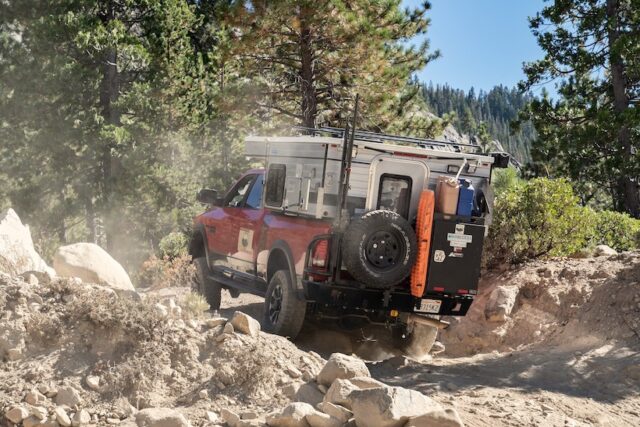
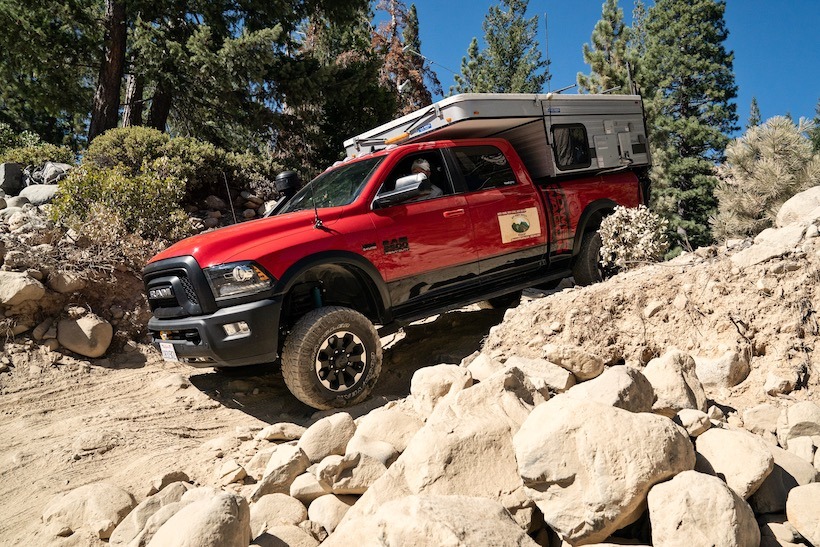
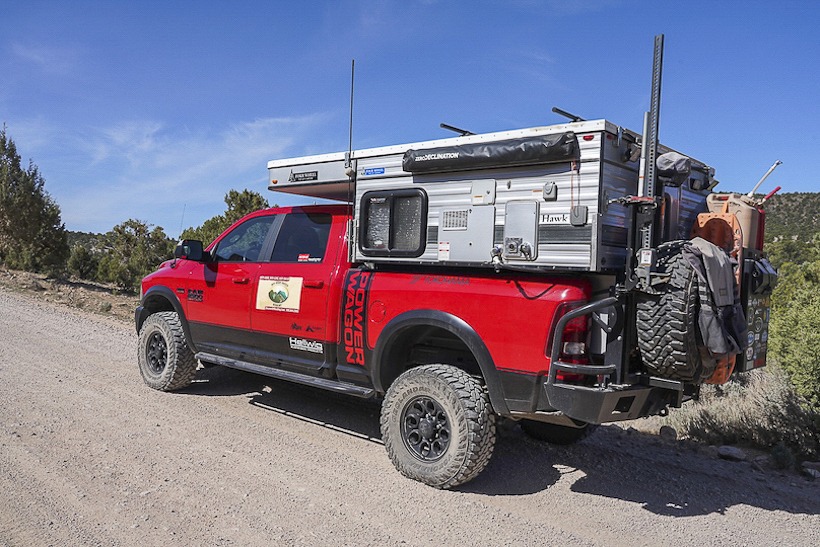
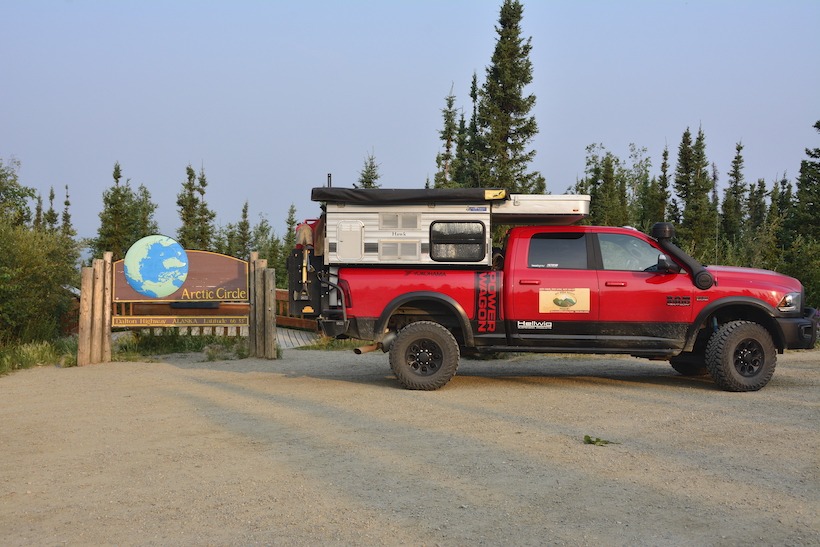
2018 Power Wagon & Four Wheel Camper – Hawk Model

Bob Wohlers, Owner/Instructor Off-Road Safety Academy and Author of Off-Road & Overland Adventure Infobooks

Why did you choose your rig platform and how long have you had it?

I purchased both my Ram Power Wagon and Four Wheel Camper (FWC) in early 2018 brand new (I don’t buy used vehicles anymore). The primary reason I selected this vehicle and camper combo would be a surprise to most, and my reason is not common among those that purchase such a setup. I bought this vehicle combo because I personally did not own a 4WD vehicle in this category – long wheelbase 3/4 ton 4WD truck with an enclosed and comfortable habitation camper. I know what you are thinking, “Say what?”

My vehicles are a huge part of my business. I already own two other 4WD vehicles, a 2004 Jeep TJ Rubicon and 2013 Jeep JKU Rubicon. The TJ is set up strictly for rock crawling and day-long scenic backcountry touring and the JKU is primarily set up for international overlanding excursions. Additionally, my JKU overlander was a pain to sleep in and eat out of at the many crowded overland and off-road shows I attend. The roof top tent on the JKU is not very “private” at large shows and cooking outside of the vehicle is a pain with lots of folks around. The JKU is great for camping when alone in the backcountry, but not with close neighbors around. So, enter the Power Wagon with the very comfortable FWC. With all three vehicles in my stable, the purchase of the Power Wagon didn’t mean I had to give up, for example, my annual Rubicon Trail rock crawling trek.

PowerWagon, four wheel camper, pop up camper, FWC, hawk camper, overlanding, over land, overland, off-road, off-roading, off road, vehicle supported adventure,

So, why the Power Wagon and not some other brand of ¾ ton truck? The answer for me was easy. Off the showroom floor, and with almost no need for modification, the Power Wagon had all the trail worthy features I desired (modern gas engine, solid axles, a lift capable of handling 35” tires, lockers front and rear, front swaybar disconnect from the dash, a winch, and can tow my Jeep TJ on a flatbed trailer). Since I already loved the trail worthy features in a Jeep Rubicon, the Power Wagon just made since for me because the Power Wagon is essentially a truck version of a Jeep Rubicon. With the Power Wagon I love driving easy graded roads in the backcountry, but it has the capability of tackling difficult terrain.

Why the FWC? This was an easy selection for me personally. I’d had my eye on off-road campers for some time and when it came time for a purchase, I knew the choices. I even went to several of the factories that made off-road specific campers. At the time, there was one clear first place camper choice for me personally. FWC had all the features I wanted: 1) built specifically for off-road, 2) tough aluminum frame, 3) had a low profile for tree and rock overhangs, 4) would be very comfortable when the weather was bad, 5) full indoor kitchen, furnace, refrigerator, dinette, etc., 6) as a company, Four Wheel Camper is NOT going out of business anytime soon (this is huge), and 7) the camper was reasonably priced.

What mods have you done to it and why? 

Since no vehicle is perfect for how you wish to use it, modifications are sometimes necessary. As purchased from the showroom floor, all I added was an AEV snorkel, rock sliders, and larger tires. Those are the only trail worthy modifications I made to the truck that have nothing to do with the addition of my FWC. I wanted larger tires to give the truck better traction and to increase overall clearance – axle and body. To run larger tires, I also added new rims from American Expedition Vehicles with the correct backspacing. Since I knew that I’d occasionally be in the rocks, I added the rock sliders for door panel and underbody rocker protection. I added a snorkel and pre-cleaner to allow the engine to suck in cool clean air when crawling across dusty terrain for hours. Okay, it helps with stream crossings also.

To handle the addition of my camper, I added aftermarket rear axle airbags and a larger-diameter sway bar. I purchased both items from Hellwig as I knew from experience, they made tough equipment. I also mounted my airbags on Daystar Airbag Cradles to allow for extended rear axle articulation when on uneven terrain.

On the Power Wagon, I swapped out both the front and rear bumpers. These were very personal utility modifications that many may not need to make – especially the front bumper. For my rear bumper, I added the Aluminess swing out tire carrier and storage box. When I need to change a spare tire, I don’t want to struggle to get the spare from the underside of the truck bed. Sometimes you can’t even get to the spare under the truck when in deep mud and snow. I also needed additional storage for my recovery equipment, hence the Aluminess swing out box.

PowerWagon, four wheel camper, pop up camper, FWC, hawk camper, overlanding, over land, overland, off-road, off-roading, off road, vehicle supported adventure,

It’s great that the Power Wagon comes stock with a winch (the only truck in North America that does). However, the winch is mounted in such a way that it is totally hidden from view. You can’t see the winch’s drum and winch line unless you lay on the ground and look up. Horrible. So, because I teach winching and winch a lot, I needed a better bumper that allows me to see the entire winch for proper winch line management when respooling. American Expedition Vehicles makes great Ram front bumpers that are winch-ready. If you only winch occasionally, you will be fine with the stock bumper and WARN winch.

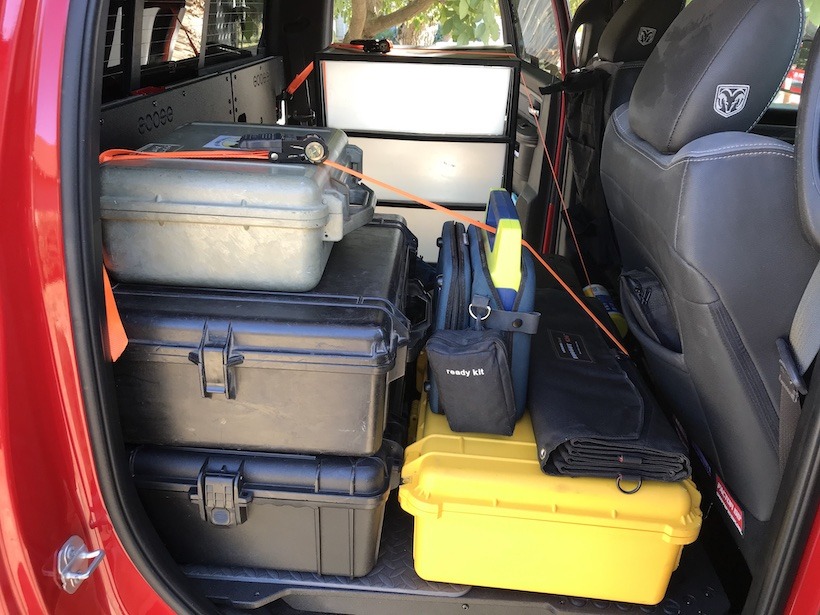
One last modification that was right for me, since our kids are all grown, was removing the rear crew cab seats. This allowed me to lose some 200 plus pounds of unneeded weight. Next, I added the wonderful Goose Gear Rear Seat Deletes. This modification really helped with adding needed off-road equipment and securing it with straps. Because of the Crew Cab storage capability, we never have to remove boxes from the back of the camper to work, relax, or sleep in the camper. Just pop the top and relax.

PowerWagon, four wheel camper, pop up camper, FWC, hawk camper, overlanding, over land, overland, off-road, off-roading, off road, vehicle supported adventure,

What would you do differently if you could start from scratch?

I can only answer this question if I had more cash when making both of my purchases – truck and camper. If I had more money, I might have gotten an American Expedition Vehicle Prospector XL on a 3500 platform. I’ve found that I could really use the extra payload and towing capability. Regarding the camper, I would have gotten a flatbed Four Wheel Camper, rather than a slide in version.

Also, if I had more cash, I might have bought a new Ford E-Series Sportsmobile (now called Field Van). Vans have several huge advantages over any type of camper placed on a truck. First, once you are finished driving, you don’t have to get out to work in the living space. This is great for security in sketchy areas and when the weather is bad. Second, you have lots more living space as the passenger chair (and sometimes the driver seat) can rotate and point to the rear of the van. This adds comfortable seating and floor space in the living area. My next overlanding vehicle in this larger vehicle category may be a Field Van – their Classic E-Series.

What’s the one thing that make your rig awesome for you?

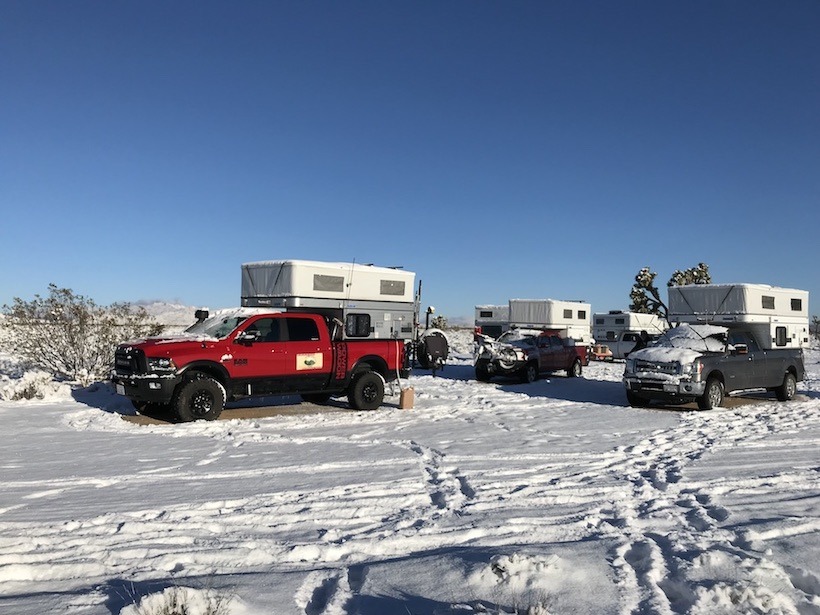
After years of camping in ground and roof top tents, I LOVE my FWC. To me it feels like a palace when it’s snowing outside and I’m quite literally in the middle of absolutely nowhere. Further, I love the deep growl of my Ram 6.4L Power Wagon engine when I pass at 70 mph other overloaded overlanding vehicles (you know who you are) struggling up a long hill on Highway 50 in the Humboldt-Toiyabe National Forest. Did I mention the truck and camper combo rides better on the pavement than my wife’s Lexus IS300?

PowerWagon, four wheel camper, pop up camper, FWC, hawk camper, overlanding, over land, overland, off-road, off-roading, off road, vehicle supported adventure,

What’s not so great? What characteristics or components would you change if you could? 

As I said previously, the Power Wagon front bumper is horrible if you need to winch repetitively. Secondly, the Power Wagon is purchased with a red sheet of paper in the glove compartment. On that sheet in white text, it reads: “It is not recommended that the owner place a slide-in camper in the truck bed.” The paltry maximum payload of the Power Wagon is 1466 pounds. This low payload for a 3/4 ton truck is due to the very soft coil springs used on all Power Wagons to allow for robust axle articulation on uneven terrain. I screwed up the off-road specific design of the Power Wagon by putting a heavy camper on the rear with a tight rear sway bar and airbags. I do have a set of stock RAM 3500 coil springs in my shop waiting to be put on the Power Wagon – just to experiment. I also wish this vehicle had more overlanding range. Off-road I can get about 230 miles on a full tank of fuel, when in 4WD high. That range is okay, but not wonderful. I typically carry two five gallon jerry cans of gas on long excursions.

PowerWagon, four wheel camper, pop up camper, FWC, hawk camper, overlanding, over land, overland, off-road, off-roading, off road, vehicle supported adventure,

Final thoughts and words of wisdom when choosing an overlanding adventure rig?

Regarding this question, I feel compelled to say that there is no such thing as the perfect 4WD vehicle. You decide on the perfect off-road vehicle for the terrain you wish to tackle, where you want to go, and how comfortable you want to be when driving and camping.

That being said, I’d like to cite Scott Brady’s “Ten Commandments of Modifying an Overland Vehicle.” As most know, Scott is the Publisher and Chairman of Overland Journal. I agree with all of his ten points. My Power Wagon violates a couple of these commandments, but my overlanding Jeep JKU does not. For example, my JKU is the vehicle I would ship to Cape Town, South Africa for international travel, not my Power Wagon.

Even though Scott’s list primarily speaks to how you modify a vehicle for overland travel, it also speaks to choosing an overland adventure vehicle.

  1. Complexity is the enemy
  2. Weight is the enemy of performance
  3. Suspension performance
  4. Keep engine stock
  5. Isolate and minimize all electrical modifications
  6. Use high quality tires in an appropriate tread
  7. Avoid heavy roof loads
  8. Be able to self-recover (take professional training)
  9. Always secure your load in the cab
  10. Quality and design over quantity of “stuff”

Simplicity and reliability are the keys to vehicle preparation for long-distance adventure travel.

____________________________________________________________________
Need help building that rig, then check out TAP’s Ultimate Resource Guide to Overlanding HERE

For more Pop Up Camper articles, CHECK HERE

The Ultimate Overland Vehicle – A Tacoma Owner’s Perspective

tacoma, trd, backwoods adventure minds, ultimate overland vehicle, vehicle supported adventure, overlanding, over land, overland, off-road, off-roading, vehicle supported adventure,

The Tacoma: So what is the Ultimate Overland Vehicle? Well, that depends on who you ask and I think we’ll all agree that it tends to be the one we’re driving, or at least we want everyone to think that! That being said, we reached out to a few of our friends from the overland industry and asked them to give an honest opinion on what they’re driving, why they chose it and what they’d do differently if they could? This is a multi part series, where we take a look at several popular overlanding platforms.

2017 TRD Offroad Toyota Tacoma – Short Bed

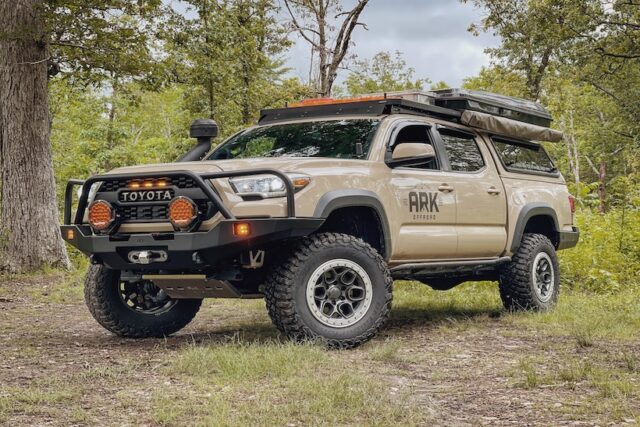
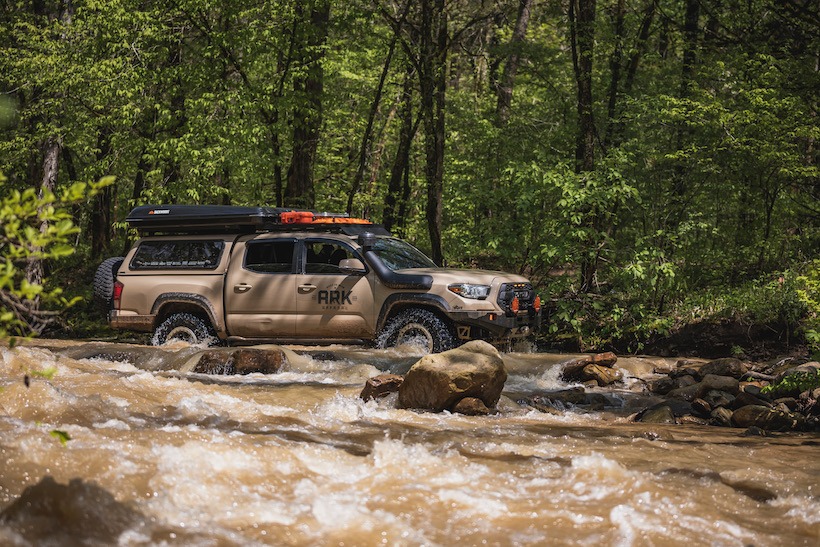
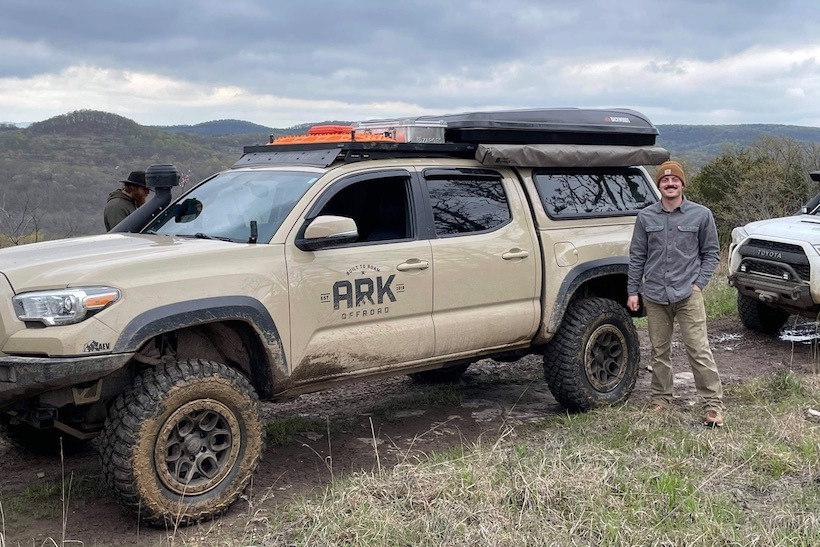
Owner: Grant Willbanks, Marketing Manager of Backwoods Adventure Mods and creator of Youtube channel ARK Offroad.

Why did you choose your rig platform and how long have you had it?

I’ve had my Tacoma for exactly 1 year now and have several reasons why I chose it specifically. My last vehicle was a 2000 Jeep TJ, which had a short wheel base, solid front axle, limited storage/seating, and was very analogue and basic. No lockers, no power locks or windows, and even no A/C from the factory. That vehicle was a beast offroad after regearing and running 35’s, and was small and nimble enough to fit anywhere, but it suffered with long distance travel, had zero creature comforts, and had quite a bit of reliability issues. After learning from the weaknesses of my previous vehicle (which I believe everyone should experience for themselves and not just buy something because someone recommends it), I discovered I wanted something that was more suited for long distance travel, something that had large aftermarket support, something that had some decent tech, something that had a good offroad package, and something that had great reliability. I landed on the 4Runner and Tacoma platforms as my main contenders, but was still unsure of which generation to go with. I liked the idea of a 4Runner because you could keep all of your gear contained inside and out of the weather, but you wouldn’t have the benefit of leaf springs, towing, and hauling things like you do with a truck and bed platform. After much consideration, I landed on the 3rd gen Tacoma because I wanted as much versatility and amount of different configurations as possible. The track record of the 2nd gen Tacomas is really what sealed the deal for me. I almost went with a 2nd gen, but wanted more tech and comfort. The Tacoma is my platform of choice because a truck bed again, gives you so much versatility – you can add a bed rack/tent, camper shell, Go Fast Camper style setup, etc. The double cab also allowed me more passenger space and made for a better family daily driver, something I didn’t have with the TJ. What I eventually did was more or less convert my Tacoma into a 4Runner by adding the camper shell. So far, I’m still very happy with the Tacoma. It seems to be the transformer of overland vehicles.

tacoma, trd, backwoods adventure minds, ultimate overland vehicle, vehicle supported adventure, overlanding, over land, overland, off-road, off-roading, vehicle supported adventure,

What mods have you done to it and why? 

I bought the truck used with 39k miles and it already had a lot of work done to it. I somehow lucked out and got a screaming good deal on it. It already had King 2.5’s suspension all around, 4.88 Nitro gears, some decent wheels and tires, camper shell, and a few other odds and ends. Since then I’ve added all Backwoods Adventure Mods armor (aluminum Hi-Lite front bumper with bull bar, aluminum/steel rear high clearance dual swing out bumper), locally made sliders, Warn synthetic 12k winch & Factor 55 fairlead and Flatlink, RCI full aluminum skid plates, AEV Crestone wheels and 34″ BFG KM3 tires, Pathfinder lighting, Safari Snorkel with Syklone pre-cleaner, low pro Front Runner roof rack and camper shell roof rack, All Pro aluminum dual jerry can holder, Decked drawer system, Alu-Cab tilting fridge slide, Dometic CFX45 fridge, Maxtrax, Zarges storage box, Viair 400p hardwired air compressor, Clazzio leather seat covers, and a prototype Backwoods Adventure Mods popup roof top tent. I’m going to be honest, all of the mods are spectacular, and I love each of them, but you don’t need every single thing. The biggest thing with mods in general in my opinion is not to buy one single thing without realizing that you need it first. Go out and learn what exactly you need first.

tacoma, trd, backwoods adventure minds, ultimate overland vehicle, vehicle supported adventure, overlanding, over land, overland, off-road, off-roading, vehicle supported adventure,

What would you do differently if you could start from scratch?

Part of me wishes I bought the truck new, but considering how much I paid for it with all of the suspension and gearing done, it was a no brainer. I’m still finding little things here and there that the previous owner did to the truck. There’s a certain sense of security knowing every single detail that’s ever been done to your rig, but at the same time it would be hard for me to buy a brand new truck and wheel it through the woods. From a modifications perspective, I wouldn’t change much. The only thing I would change would be the gearing from 4.88’s to 5.29’s. 

What’s makes your rig awesome for you?

One of the most unique things about the rig is the camper shell/rear storage setup. I have a whole philosophy on truck bed setups and gear organization which you can see on my YouTube channel, Arkansas Offroad, but the idea of a camper shell (with side window access) on a truck keeps things so accessible, protected from thieves, its super clean and organized, and it opens up so many configurations for gear placement. I have a Decked drawer system and a fridge slide mounted on top of that. On top of my camper shell, I have a hard shell roof top tent. That combo in my opinion is money. Besides the camping gear setup in the truck, the other thing that works super well for my setup is running as much aluminum as possible. These trucks can get super heavy when we add all of our gear, armor, and camping equipment. I knew this truck was never going to be a rock crawler and didn’t need full steel armor. I built this truck to be a very capable daily driver, so I went with aluminum everything. It helps significantly with weight, but also is super easy to drill into or modify, and it doesn’t rust. 

tacoma, trd, backwoods adventure minds, ultimate overland vehicle, vehicle supported adventure, overlanding, over land, overland, off-road, off-roading, vehicle supported adventure,

What’s not so great? What characteristics or components would you change if you could?

The number one thing I don’t like about the 3rd gen Tacoma is the transmission. That extra overdrive gear (6th gear) is super annoying on the highway. Even with 4.88’s, sometimes it battles between 5th and 6th gear. On a fully built Tacoma with stock gears, it’s a nightmare on the highway going uphill. I’ve been in a couple buddies rigs. The transmission constantly hunts for the right gear. I know you can get a tune, but it would be nice to simply regear and be done. The other thing I can’t stand is cruise control. I legit get angry and don’t even touch it anymore. If you set it at 70mph on the highway and you even barely start to go up a hill, the truck will downshift from 6th to 4th and scream until it gets back to 70mph, even if you only drop to 69mph, it freaks out and goes full throttle to get back to whatever speed you set. So actually, maybe that’s a transmission issue too. I’m no expert in that, but that’s been my experience and several of my friends as well. 

Final thoughts and words of wisdom when choosing an overlanding adventure rig? 

Biggest thing when choosing an overland rig to me personally is to evaluate what type of trails and terrain the vehicle will be in most of the time. There’s a massive difference in someone choosing an overland rig who lives in California compared to someone who lives in Virginia. If you live and wheel somewhere where trail width isn’t an issue, then a full sized rig might be a great option. If you live and wheel somewhere where the trail is super tight and technical, then maybe a vehicle with a smaller wheel-base or midsized platform is better. I live in Arkansas where we have super tight trails and my Jeep TJ was a champion getting through them. My Tacoma is a little harder, but definitely doable. Out of all of my friends that wheel with me locally, I don’t know anyone with a full sized rig. So be sure to factor the overall size of the vehicle first and how it will work in your environment. From there, I would think about your gear storage and what you plan to carry in your vehicle. I’m guessing most people will be using their overland vehicle as their daily driver as well, so to me, comfort is a huge factor too. Biggest thing I’m trying to stress is think how you will use the vehicle. Period. You might think you need lockers, etc. but are you ever going to put your vehicle on trails where they’re really needed? Lastly, don’t get caught in the Instagram world and think you need everything. Nobody needs 500 lights on their rig, etc. I would add modifications as you see a need for them by personal experience. There’s nothing more I love seeing than a barely modified vehicle make it through an obstacle where a fully built, over the top, vehicle gets stuck. As far as modification order, I would think of your vehicle build in stages. Stage one: Think about overall weight first and dial in your suspension, UCA’s, wheels/tires, leaf springs, recovery, etc. You need a good base to start with and don’t ever want to have to come back to something to fix it because you’ll end up doing something twice. Then move to stage two: armor – sliders, bumpers, roof rack, etc. Then stage three: camping accessories – drawers, fridges, tents, luxuries. Overall point, get out there and LEARN WHAT YOU NEED BEFORE slapping the whole catalog of parts on your rig! And lastly, Keep in mind that there is not one vehicle or platform out there that is perfect in every way. There’s never going to be a perfect vehicle. That’s the beauty of modifications – you build and customize it to exactly your needs and circumstances. 

_________________________________________________________________
For more overland and off-road capable rigs, CHECK HERE

The Project M Shell: Looking for Adventure

Project M, FWC, Four Wheel campers, pop up campers, overlanding overland, over land, overland campers, off-road campers, off-road, off-roading, off-road adventure, vehicle supported adventure, adventure rig,

Featured Story: Sponsored Content

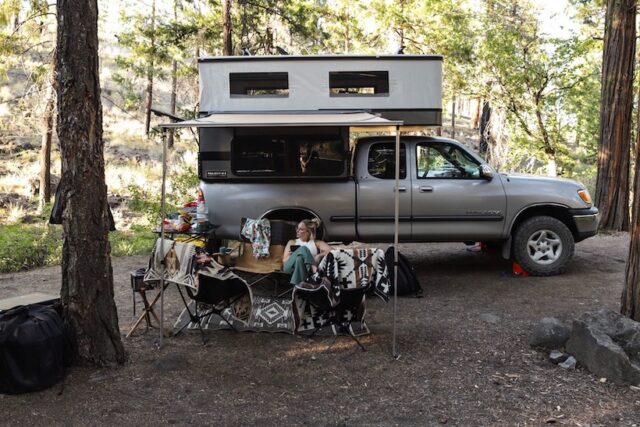
Overland Adventures in a Project M Shell: This isn’t your typical love story. Matt is the wildest human you’ve ever met with an unending love affair with the outdoors. I’m more of a brunch and massage in the city type with a love affair for all things cozy. I’m also eight years older, have had a day planner and a retirement plan since sixth grade and Matt didn’t even have a credit card when we met and he still couldn’t tell you what we’re doing tomorrow, much less in a few years. We were introduced by mutual friends, hung out a few times and honestly just loved being together. But we never stopped hanging out. Eight months after we met, we were engaged at Crater Lake and five months after that, we eloped on the Columbia River Gorge under a waterfall. A bit broke but totally in love. On paper, we make no sense. But here we are, eight years together, and living out our mutual dream of adventuring and seeing as much of the beautiful Pacific Northwest as possible in our beloved Project M shell from Four Wheel Campers.

Project M, FWC, Four Wheel campers, pop up campers, overlanding overland, over land, overland campers, off-road campers, off-road, off-roading, off-road adventure, vehicle supported adventure, adventure rig,

We’re what you would call weekend warriors. Both of us have 9-5 jobs in Portland, OR and live it up during the weekdays enjoying the city but on the weekends, we’re headed to the wilderness. I wasn’t always like this. I’ve always loved the outdoors but Matt has given me the courage to embrace it in a way I never had the nerve to. It also helps that he does all the cooking while we’re camping and adventuring. Yes, all of it. I know, I’m one lucky girl. But I handle the cocktails so I feel like it’s even.

Project M, FWC, Four Wheel campers, pop up campers, overlanding overland, over land, overland campers, off-road campers, off-road, off-roading, off-road adventure, vehicle supported adventure, adventure rig,

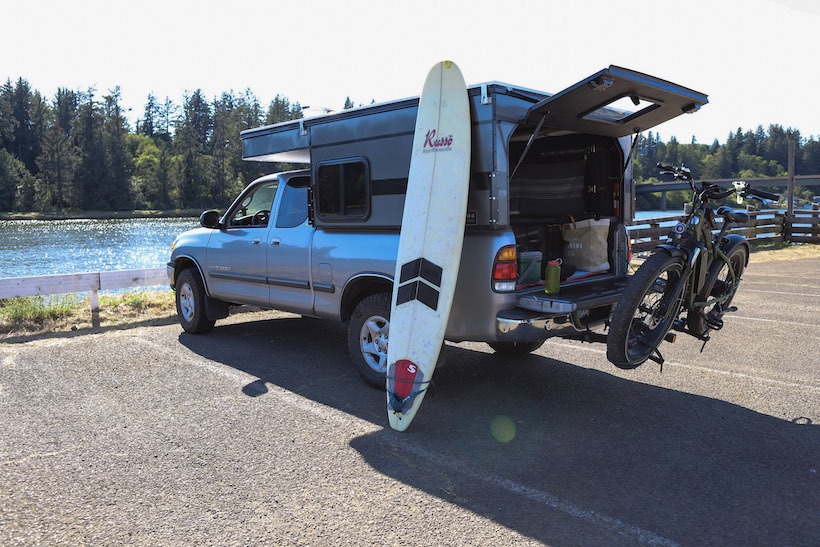
Our search for the perfect off-road adventure vehicle began a few years ago. I love being in the city but Matt craves time away and the longer we’ve been together, I’ve begun to feel the same. I’m from East Texas where the woods are deep and the trees are huge. You can’t get that out of your blood. We both work hard during the week (I’m in marketing and Matt is a carpenter) so when Friday rolls around, most every weekend is spent at the Oregon coast, in the woods or on Mt Hood, especially in the winter. We purchased a Volkswagen Eurovan a few years ago and thought it would be the perfect mix of functionality, vibes and camping ease. Yes, I already know what you’re going to say but they ARE so damn cute.  We’re one vehicle household and needed something for city life and overland adventuring. We had the van for about two years before realizing it wasn’t quite as functional as we had hoped plus we were spending more than we budgeted on repairs. It was tough to do but we decided to sell the van about a year ago. After that, we bought a 2002 Toyota Tundra sr5 access cab 4×4 and Matt built out the truck bed to be a camp space. It worked but honestly, the comfort level just wasn’t there for me. Plus, having something you can stand up in is a complete game changer. We knew this would be a short term fix while we researched the perfect option for us. After months and months of watching YouTube reviews, researching online, talking to friends and really digging into what we needed we decided on the Project M from Four Wheel Campers. We drove down to Sacramento about a month ago to have it installed and WE ARE IN LOVE! Please believe me when I say I’m getting the best sleep of my life in this thing. It’s now July and we have every weekend booked through October at different spots.

Project M, FWC, Four Wheel campers, pop up campers, overlanding overland, over land, overland campers, off-road campers, off-road, off-roading, off-road adventure, vehicle supported adventure, adventure rig,

Here’s what we love about our Project M Shell:

This over land camper is big. Like, really big. We went with the Project M shell because once again we’re a one vehicle household and needed something practical that we could still park in downtown Portland. Also, Matt is a carpenter and uses the truck to haul tools and lumber during the week but on weekends it’s surfboards, paddle boards, bikes, skis and everything else you can imagine. We like having the use of the full truck bed.

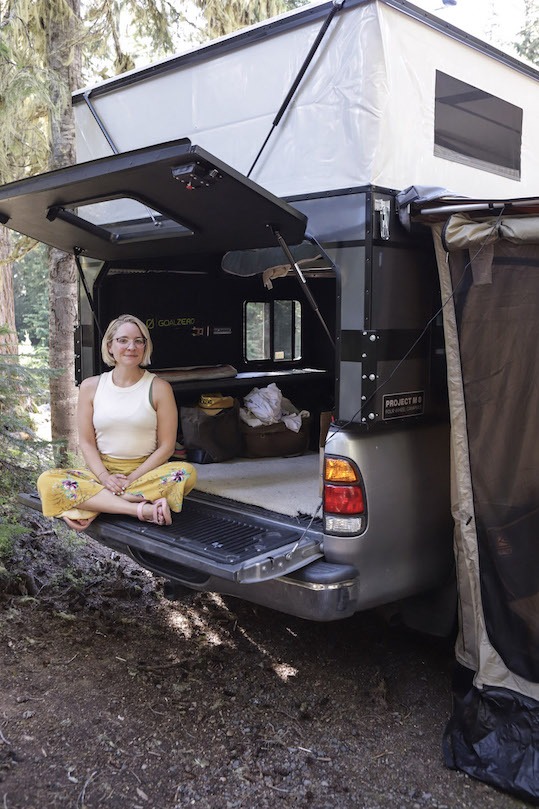
The Project M shell is extremely comfortable. If it’s not quiet and cozy, I just can’t do it. Some of you are happy as can be on a bed of rocks and a view but yall, it ain’t me. I have mad respect for those that can manage, my husband is the same, but I need a bit more elements of comfie. We both love that we’re able to stand up in our Project M and the space under the bed is perfect for a couple of camp chairs. We have the Four Wheel Campers mattress and also installed a solar powered fan and it is heaven on earth. Did I mention the bed is king size?! It’s bigger than what we have at home. It’s also super easy to use and a major conversation starter. We’ve only had it a few weeks but so many people stop to ask us about it. Which we love, because we might be the most outgoing folks in Oregon. Come hang out with us is what I’m saying. 

Project M, FWC, Four Wheel campers, pop up campers, overlanding overland, over land, overland campers, off-road campers, off-road, off-roading, off-road adventure, vehicle supported adventure, adventure rig,

We also love the add ons which have made our Four Wheel Camper exactly what we needed. The awning with the screen + privacy wall is incredible and adds a living room feel that’s also protected from bugs. Goodbye, gnarly Oregon alpine lake mosquitoes. We purchased a cheap outdoor rug from the hardware store to add to the inside which has really made it work. Matt enjoys cooking under the awning as it keeps you protected from wind and other elements.

Project M, FWC, Four Wheel campers, pop up campers, overlanding overland, over land, overland campers, off-road campers, off-road, off-roading, off-road adventure, vehicle supported adventure, adventure rig,

The company can be trusted. Four Wheel Campers has been around quite a while which made us feel safe choosing to invest in a rig that was outfitted by their organization. They’re also all so unbelievably kind which made our buying process a breeze. I look forward to my interactions with their team. The install was easy and they were very patient with all the questions we had. Matt is a thorough researcher who has loads of questions and it didn’t bother them at all.

There’s also plenty of room to haul our gear. And yall, we have a lot of gear. You could say we try everything. (And I do mean everything.) Between the two of us we bike, ski, hike, surf, camp, rollerskate, swim, paddleboard, fish and continue to pick up new hobbies every year. The beauty of living in Oregon is how many fun vehicle supported adventure outdoor options are available year round as well as all the people who are willing to join you on adventures.

FWC, Four Wheel campers, pop up campers, overlanding overland, over land, overland campers, off-road campers, off-road, off-roading, off-road adventure, vehicle supported adventure, adventure rig,

We’re thrilled with our Project M shell and can’t wait for fall camping and winter ski trips. One thing I’ve pressed into is the understanding that you can work full time and also have a full and rich life in the outdoors. I don’t necessarily love spending 40 hours a week in front of a computer screen but I do enjoy my work (most of the time) and the freedom it gives me to explore wild places. Even if it’s just 2-3 days a week. We make it work and hope to encourage others that they can do the same. We’re all figuring it out as we go and your perfect life might look different than other people’s. Again, that’s ok!

If you ever see us out and about, please say hello! I’ll make you a killer margarita and Matt will most likely offer to take you surfing. It’s just how we are. Massive thanks to all of you enjoying the outdoors and inspiring others, like myself, to continue doing the same. What a beautiful world we live in. I’m just happy to be here. 

Check out Laura and Matt’s IG’s and Website below:

@laura_elizabeth

@exploremattarbo

www.thearbos.com

_____________________________________________________________
For more Four Wheel Camper stories check HERE

Sponsored Content:

DMOS Collective – Behind The Wheel

Dmos, Dmos shovels, Overland shovels, off-road shovels, overland, over land, off-road, off-roading, vehicle supported adventure,

The new “Behind the Wheel” series is an up close and personal look at brands and their owners who are an authentic and passionate part of the exciting world of Vehicle Supported Adventure. Today we’re sitting down with SUSAN PIEPER, Founder of DMOS Collective, the leading brand in the premium overland recovery shovels for adventurers around the world.  

Susan, great to chat with you. Let’s start with your background and why and how you founded DMOS Collective?  

Our brand story starts with me.  I grew up in the Midwest, was educated in the East, worked in corporate finance and tech, became a wife and mother of four, and sailed 10,000 ocean miles (half of it as captain and owner).  When I moved to the Jackson Hole area 10 years ago, I found myself at a career and life crossroads.  I knew I had always wanted to start a company, create jobs, be an American manufacturer, and solve a problem.  So, I got divorced, became a single parent, and put all of my effort into creating and shaping DMOS into an expression of American ingenuity, quality, and service.  

That may leave your readers wondering, “why shovels?”  So, here’s THAT story (I am full of stories by the way!).  I was not born an inventor and I always advise people who want to start a business to work with startups first.  So, before I started DMOS, when it was just the germ of an idea, I had been working with a former tech colleague from Park City.  He invented a snow paddle (I am not making this up… those who know, know!) and I was helping him because I believed in him and in the process of invention.  In the spring of 2014, my friend and former colleague became seriously ill with a life-threatening condition.  He turned to me on Mother’s Day of 2014 and asked me to take over the idea.  I call that my “Mother’s Day” CEO promotion and, of course, I said yes.  (He eventually recovered and, as for his career, became a successful tech CEO and Board member).  

Dmos, Dmos shovels, Overland shovels, off-road shovels, overland, over land, off-road, off-roading, vehicle supported adventure,

With his invention, to make it more successful, I removed the paddle from the telescoping, full-sized handle, and put on a shovel/rake head.  This product became first the Kicker Tool and today’s Stealth Shovel which is a compact, portable, and versatile.  It came to market in October of 2015 with a successfully funded Kickstarter campaign and won the best new Hard Good at the ISPO Show that year (International Sports Products Organization).  

I believed then and believe now that the off-road ready Stealth Shovel proved that the market for hand tools was lacking innovation for how people live and work today.  Hardware store shovels dig but are not portable.  Plastic driveway shovels are cheap, made to fail and don’t fit your body.  E-tools were invented to be short-shafted so that you didn’t get shot in your trench.  Today, people need full-sized, super durable, and portable tools that are purpose built for mobility (for your car, truck, or camper). 

DMOS exists to make pro grade, American-made shovels, storage and goods.   We exist to make trusted gear that is always at hand and never in the way for your adventures, expeditions and work.

What’s been the greatest challenge with DMOS?

The greatest challenge has been growing a company in a resort town, while being a single parent, learning engineering and digital marketing and getting supply chain right.  So, it has ALL been a challenge.  I think if you ask any company founder, they’d have to admit that you have to really believe in what you’re doing to keep at it year after year.  I clearly really believe in what we’re doing and I’m so proud to provide a livelihood for my team and products that make a difference to our customers.  

Personally speaking, design aesthetics, coupled with a quality build is all important when parting with my hard earned $. Tell us a little about the design and production process of your product and why they are different than your competitors?

DMOS’s shovels are to hardware store type shovels as the Apple Mac was to a PC clone.  It’s just a totally different design approach.  First of all, we believe that the worst shovel problem you can have is not having one with you when you need it. So, we first designed for portability.  Second, we know that hardware store shovels and driveway shovels are sized for shipping containers and not people, so we design shovels that are sized for people to improve the ergonomics.  Third, we manufacture right here in the United States out of premium materials that will last a lifetime.  We use US sourced 6061 (aircraft) aluminum and US sourced 12 and 14 gauge cold rolled steel.  We offer multiple finishes at different price levels including the premium hardening finishes of Type II and Type III anodization and the industry-leading ceramic coating, Cerakote. DMOS’s shovels are not just a shovel but they are essential gear to keep in your car.    

Dmos, Dmos shovels, Overland shovels, off-road shovels, overland, over land, off-road, off-roading, vehicle supported adventure,

In your opinion, what keeps DMOS Collective as the innovative leader in this category? Is there one thing or is it a multitude of reasons? 

We just think differently and will continue to do so.  I am passionate about solving problems that people have.  Gear that is not portable really annoys me as much as gear that is built to fail and ends up in landfills.  I also hate the problem that hardware-store type shovels present to an overlander which is that you have to build your build around your shovel not to be awesome.  

Dmos, Dmos shovels, Overland shovels, off-road shovels, overland, over land, off-road, off-roading, vehicle supported adventure,

Any new products you’re working on and if so, when are you debuting them?

Yes!  Always!  We are making a whole line of overland storage goods… bags, boxes, and panels – soft launching this fall and with a major launch in 2022.  Our spare tire mount will be on the market in August.  

Vehicle Supported Adventure/Overlanding has obviously exponentially grown in the past 24 months. Have you seen demand come from areas outside of the core overlander?

Yes, we are increasingly supplying government agencies and the military with our shovel tools and mounts.  

As a passionate overlander, what’s been your favorite trip you’ve taken? Also, what your current rig? 

I have two rigs:  a 2016 TRD Pro 4Runner that has been substantially rebuilt and features Total Chaos control arms and sway bars as well as 10” King shocks and Eibach Springs. I have front and rear CBI Offroad Fab bumpers and two Rigid LED light bars and a Prinsu roof rack.  I also have CBI Offroad Fab body armor (rock sliders and skid plates).  I run an Optima battery and Air Raid filters and, for a little highway fun, a Pedal Commander.  I run BFG K02  275/70/R17 tires on it and have 1.5” wheel spacers.  On top of that, my DMOS gear includes our rear quarter panel interior 5th Gen 4Runner MOLLE panels, and I mount my DMOS Delta and mount on my spare tire on my swing arm bumper.  I keep my DMOS Roadside Kit and Stealth Shovel mounted to my MOLLE panels.  I have a DMOS Wavian Can holder and milled aluminum DMOS license plate frame. 

Dmos, Dmos shovels, Overland shovels, off-road shovels, overland, over land, off-road, off-roading, vehicle supported adventure,

My second rig is new to me as of June.  I just bought a 2017 Jeep JK Wrangler Willys and am working on building it to include a hardtop, a 2.5” AEV Lift,  BFG K02 35” tires and, as I removed the second row of seats, I am building DMOS storage panels in the back for to secure my recovery and camping gear and a Dometic refrigerator.  I keep my DMOS Delta Shovel and Mount on our Spare Tire adaptor (since in the Wrangler JK it doesn’t cover a backup camera).  I also keep my DMOS Roadside Kit and Stealth Shovel under the driver’s seat.

Dmos, Dmos shovels, Overland shovels, off-road shovels, overland, over land, off-road, off-roading, vehicle supported adventure,

My favorite trip that I’ve taken is the Rebelle Rally that I’ve competed in three times. I love it so much that I will be back this October for my 4th attempt at the podium.  If you don’t know, it’s a 1200 mile offroad navigation rally raid through Nevada and California and it’s simply epic.  

Dmos, Dmos shovels, Overland shovels, off-road shovels, overland, over land, off-road, off-roading, vehicle supported adventure,

Finally, any funny DMOS Collective stories you can share with us? 

One Winter a few years ago, on a trip back to Jackson from Colorado when I was in the remote Irish Canyon area, I came upon a hunter and his wife, stuck in the snow in a ¾ ton truck buried up to the axles.  I jumped out of the car and offered DMOS shovels to him and his wife (as I always have sales samples in the car plus my own gear) and helped them dig out.  He insisted on paying me $50 to help him dig out.  For a 5’5” smallish woman that I am, that’s my favorite story ever of how this business has turned into the life of my dreams where I get to be creative, drive innovation, create jobs and be of service.  It’s so damn cool!  

Thanks for spending the time with us today Susan. Good luck in 2021 and we hope to see you on the trails! 

Check out www.dmoscollective.com and TAP into Adventure. 

__________________________________________________________________________
Check out TAP’s Ultimate Resource Guide to Vehicle Supported Adventure and Overlanding HERE

Respect and Responsibility: Help Keep our Trails Accessible

tl
tl

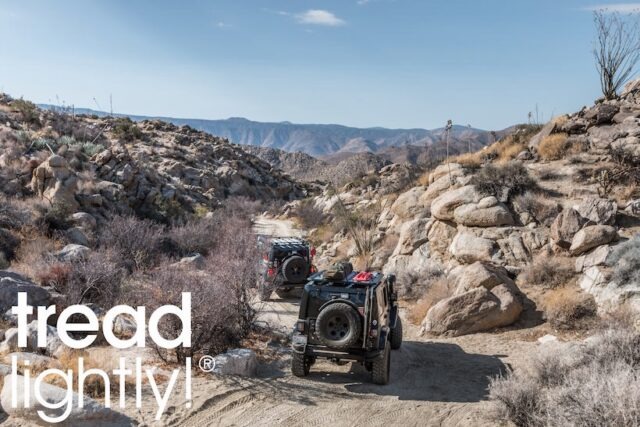
Respect and Responsibility: As off-roading and overlanding grow in popularity and machines like ATVs and UTVs are more prevalent on these trails, it’s important to remember how to tread lightly and why it’s important to stay on the trail, follow signs and leave these trails better than you found them. 

Overuse, abuse and damage lead to trail closures. No matter what kind of outdoor activities you enjoy, there is the potential to impact the land and resources negatively. To help maintain access and keep public land healthy and beautiful, outdoor recreationists need to approach their favorite trails with a sense of respect and responsibility. 

Respect for public land comes in many different forms. Not only should you take care of the resources you recreate on, but also be conscientious and courteous to those who are sharing the trail, might be at the campsite you’re using next and the land managers who maintain public land. 

So what are some ways you can be respectful when riding and off-road vehicle? Firstly, leave the area better than you found it. Bring a trash bag on the trail to help pack out any trash you might find. Stay on designated trails and go over obstacles, not around, to avoid widening the trails. 

Not only should you respect the land you’re on, but the people you may encounter. If crossing private property, always get permission from landowners and leave gates as you found them. Be conscientious of noise in populous areas like campsites and neighborhoods. Always yield to those passing you or going uphill and be courteous to other trail users and land managers.

We all have a shared stake and responsibility in taking care of our public land for current and future generations to use and enjoy. If every person who enjoys the outdoors commits to doing their part and giving back to the land they use, it could make a big difference.

There are many ways to be responsible when off-roading. Even campers, hikers and fishermen sometimes take a dirt trail on their vehicle to get to a trailhead or water shore. When on the trail, remember to travel responsibly and know what areas are open to your mode of transportation. Before you head out, check out the land management website or maps to know what trails are designated for your type of recreation. 

Remember, motorized and mechanized vehicles aren’t allowed in designated Wilderness Areas. Please respect that. Other sensitive areas to be aware of are meadows, lake shores, wetlands and streams. By staying on the trail, you avoid negatively impacting these resources. Also be aware of historical, archaeological and paleontological sites and leave these areas undisturbed and as you found them. 

Doing your part can be a small act of throwing away trash you found on the trail, supporting organizations that keep trails open and healthy or volunteering for a local trail restoration project. Help leave areas better than you found them by doing your part. This means packing out all trash you brought in and trash left by others, observing fire restrictions, avoiding the spread of invasive species and even repairing degraded areas. 

If every trail user takes the time to learn how to show respect and be responsible, it can make a huge difference on our public land and trails. To learn more about responsible off-roading and how to minimize your impact, visit treadlightly.org. 

To read more about Stewardship and Tread Lightly click HERE

____________________________________________________________________
Check out TAP’s Ultimate Resource Guide to Vehicle Supported Adventure and Overlanding HERE

Sign up for our newsletter and TAP into Adventure!