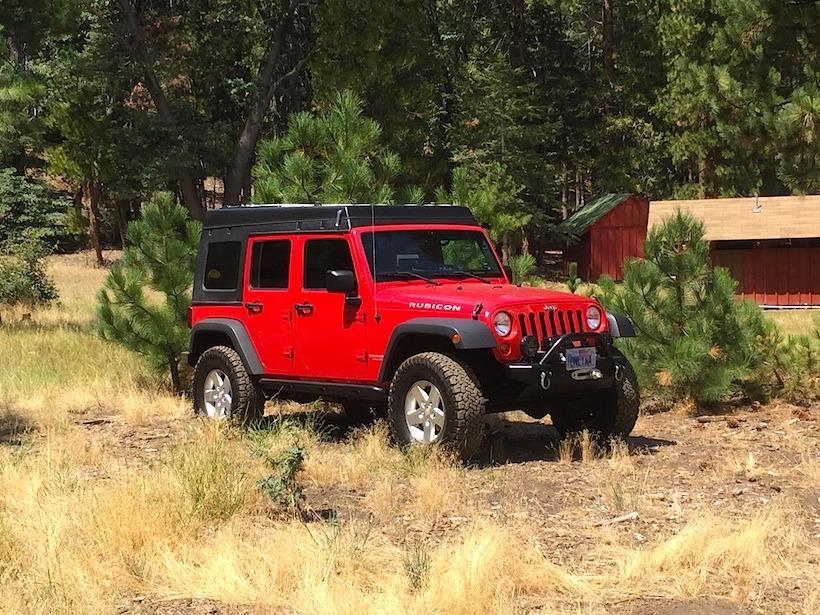
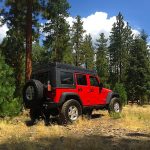
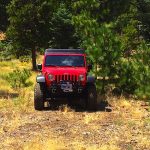
At this years American Adventurist’s Mountain Rendezvous, the TAP team met up with a lot of old friends and got a chance to make some new ones. This cherry red Jeep caught our eye so we went and met the owner Kevin Vaden. After getting a closer look at his rig, we knew that we wanted to feature it on our site. So, here it is in all it’s component glory. Enjoy and make some notes of your own.
The following is written by Kevin Vaden.
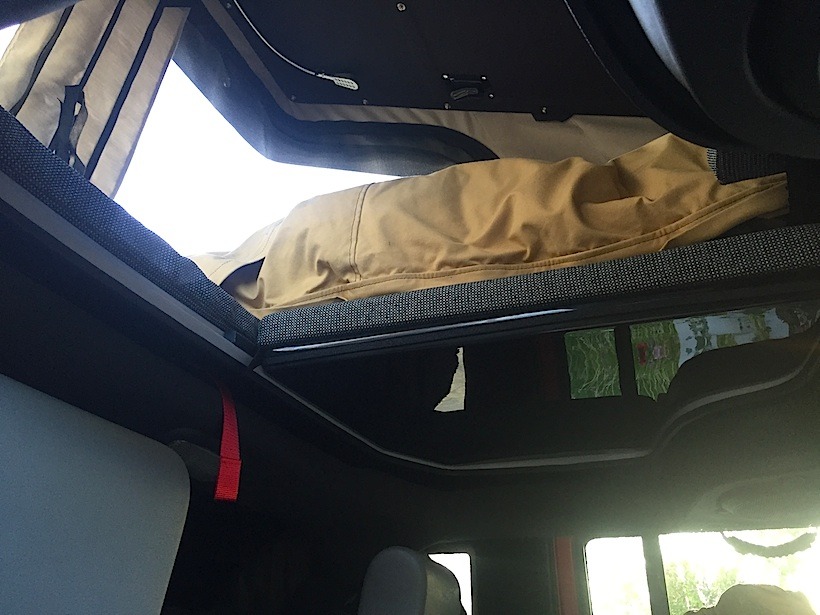
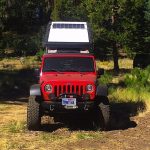
After gleaning a lot of information and advice from relevant forums, forum members, and others in the Jeep and off-road communities, I’ve spent several years building something that works quite well for me. Since my wife has not (yet?) developed an interest in this type of camping and the kids are busy with school and their own young adult interests, the Jeep is basically set up for solo expo use, but with the ability to take a passenger or two on occasion. The Jeep is about 98% done, but I doubt it will ever be complete.
While I don’t get out anywhere near as often as I’d like, I’m the kind of guy who keeps vehicles for a long time. Someday, when I grow up, I want to be “that old guy with the old Jeep.”
Highlights:
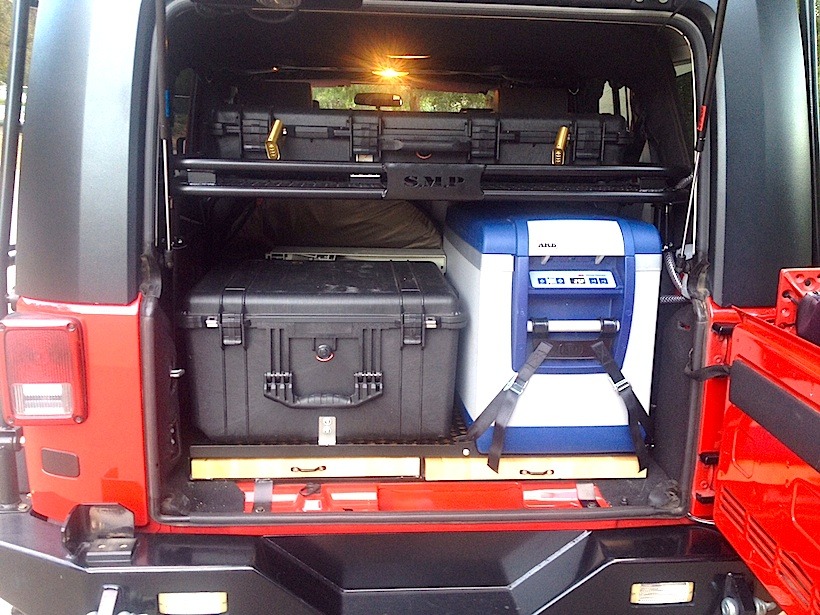
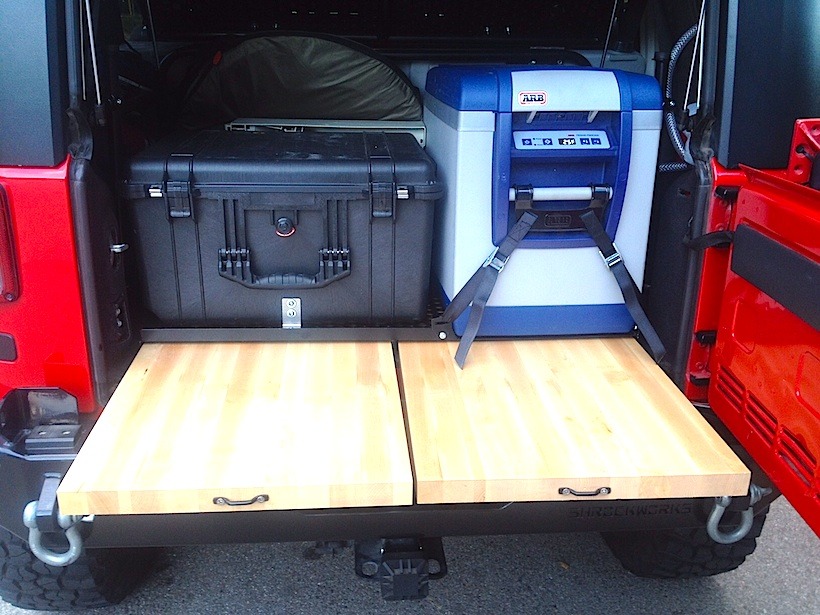
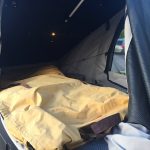
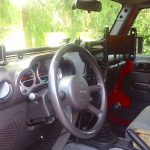
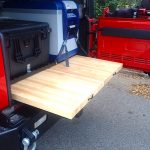
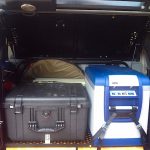
-2007 Jeep JK Unlimited Rubicon, 6-speed manual (still with 4.10 gears), 121,000 miles -Ursa Minor Vehicles J30 camper -35×12.50R17 KO2’s on OEM wheels with 1.5″ Spidertrax spacers -GenRight 20 gallon auxiliary fuel tank with Currie Antirock rear swaybar -Shrockworks front bumper (with -Warn PowerPlant and IPF 968 lights), rails, and rear bumper/tire carrier -Old Man Emu springs (2619’s front, 2620’s rear – 660# rating to better handle weight), long-travel Nitrocharger shocks, and extended brake lines -JKS ACOS adjustable spacers, driveshafts, and upper control arms -Dynatrac ProSteer ball joints -Removable custom rear cargo rack of my own design, built by SMP-Fabworks -Whelen 3” LED compartment light with both white and red settings -Vector Offroad JK E-dock with RAM mounts for iPhone, Cobra 75 WX ST CB, and iPad -ARB 50qt fridge/freezer -Front Runner 10.57 gallon upright water tank with Helton heater and pump -Dual butcher block cutting boards/tables-self designed -Pelican cases with Caribou Cargo Quick Fasten System -PETT toilet and Outback Porta Privy -Recovery gear (straps, tools, shovel, Hi-Lift, Pull-pal, etc.) -Safety gear, Adventure Medical Kits Comprehensive First Aid kit, fire extinguisher -A Renogy 100w flexible panel connected to a dual-battery set-up.
Still to come:
-So Cal Teardrops “Scipio” awning and annex
-Rigid SRM2 LEDs for utility/camp lighting on both sides
Last month TAP got the chance to try out the TemboTusk Camping Table System while on a week-long primitive overlanding camp trip in the Sierras. Here is a quick review of our thoughts after giving these tables a trial run.
First, let’s be honest, you can buy camping tables everywhere and there are a multitude of inexpensive (or should I say, cheap) products stocked in any Sports Authority or Big 5 Sporting Goods store. The next level of quality can be found in stores like REI, where the price and quality goes up, and then there’s the TemboTusk Camping Table System that’s at the higher end of the price and quality ladder. TempoTusk is a small U.S., privately owned, artisan business producing high-end, quality camping gear for the discerning overlander. (TAP note: We have used a Tembo Tusk fridge slide for the past 3 years and it has performed perfectly, despite the crazy amount of dust and dirt thrown at it.)
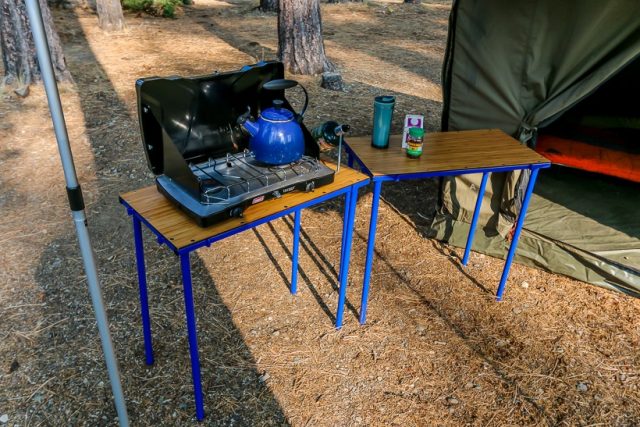
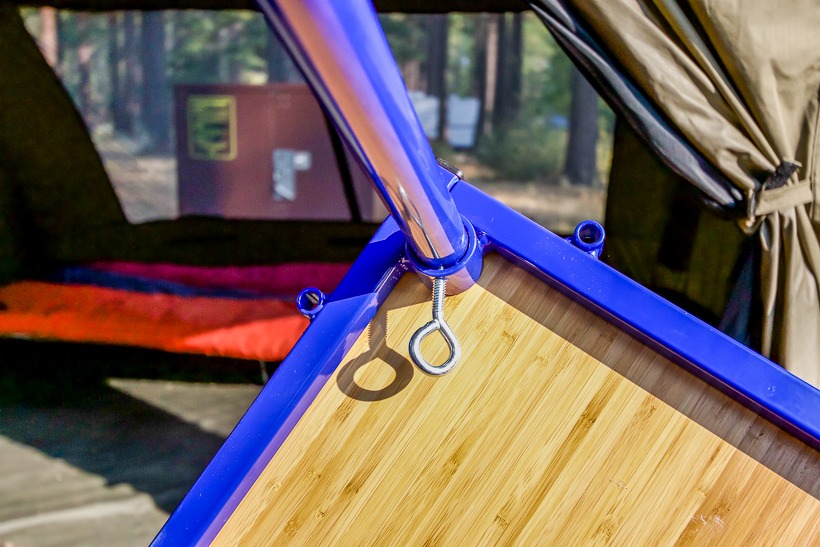
The TemboTusk Camping Table System is constructed of powder coated steel and has bamboo surfaces. It’s legs are removable and held in place by stainless steel turn bolts. The table’s dimensions are 15″ wide, 30″ long and 30″ high. Each table can be used as a stand alone or integrated into a system that effortlessly locks together to increase your cooking space. TemboTusk offers a wash basin option (not pictured here) that can be added to the table system. The tables are sold separately, or together in the “System” package. The TemboTusk Camping Table System’s build quality is obvious and I would imagine that these tables would last for many years of camping abuse.
Assembly is as simple as it can get; simply place the 4 legs into the obvious holes on the underside of the table and screw in the turn bolts. Takes less than a minute. Once assembled, the tables are sturdy and secure. The legs are adjustable for uneven ground. Lack of stability has been a personal gripe of mine while using many other inexpensive camping tables. Each table comes in a canvas carrying bag and is designed to store in most overlanding vehicle drawer systems.
In conclusion, we found the TemboTusk tables to be sturdy. Their surfaces were able to stand up to the muck of camp cooking, and they are very easy to set up and store. Aesthetically, the trademark TemboTusk blue powder coating is a great contrast to the light colored bamboo wood surface. This is a TAP recommended product: The TemboTusk Camp Table System is a solid camping gear investment and will add a level of luxury to your backcountry basecamp. Go to TemboTusk
and check out this Camping Table System, it’s separate components as well as TemboTusk’s other products and TAP into Adventure!
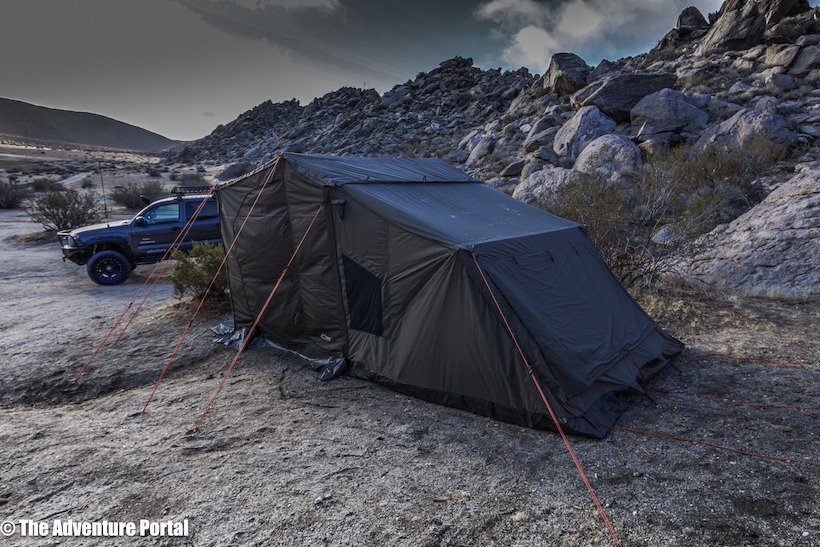
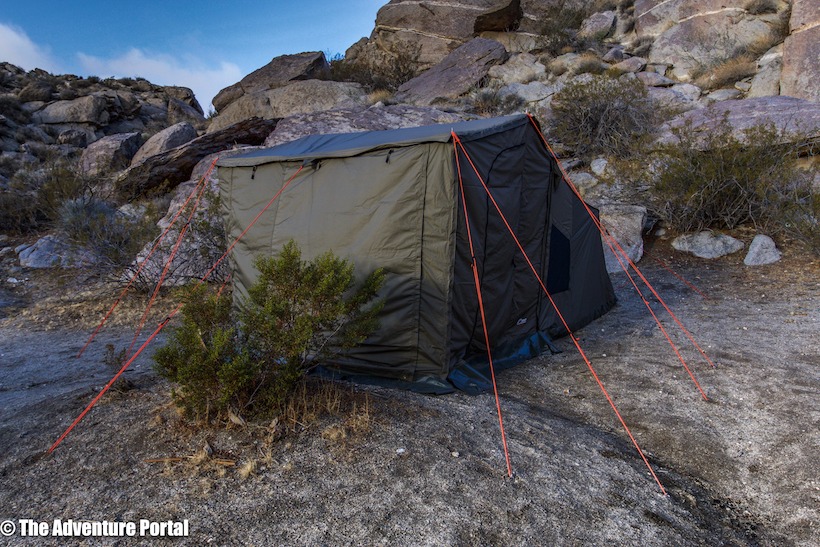
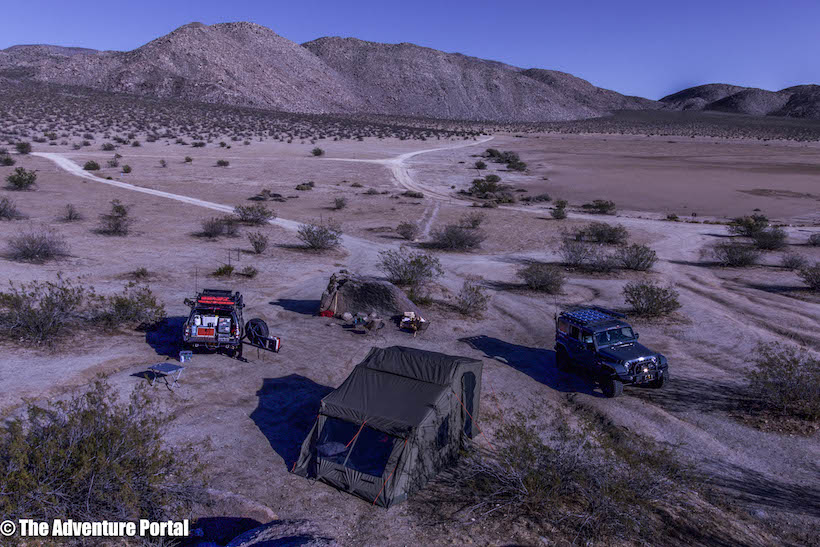
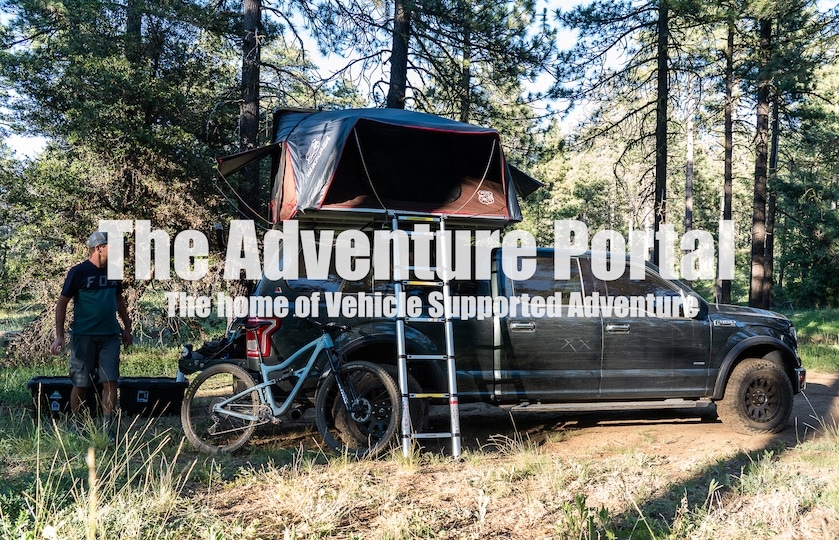
Here at TAP we’ve used roof top tents (RTT’s) on trailers for the past 5 years, so it was interesting and a definite change to go on a 5 day backcountry overland trip in the Sierra’s and get to try out the OZ-Tent RV-5.
Ground vs Roof- So, the first obvious difference is that you’re on the ground and not elevated on top of a roof. In all reality not a big deal, but you of course now have to find a fairly flat spot to set up. Being elevated off the ground certainly gives a sense of security against intrusion from critters, especially in the desert. On the other hand, not having to deal with a ladder in the middle of the night will be a positive for a lot of people.
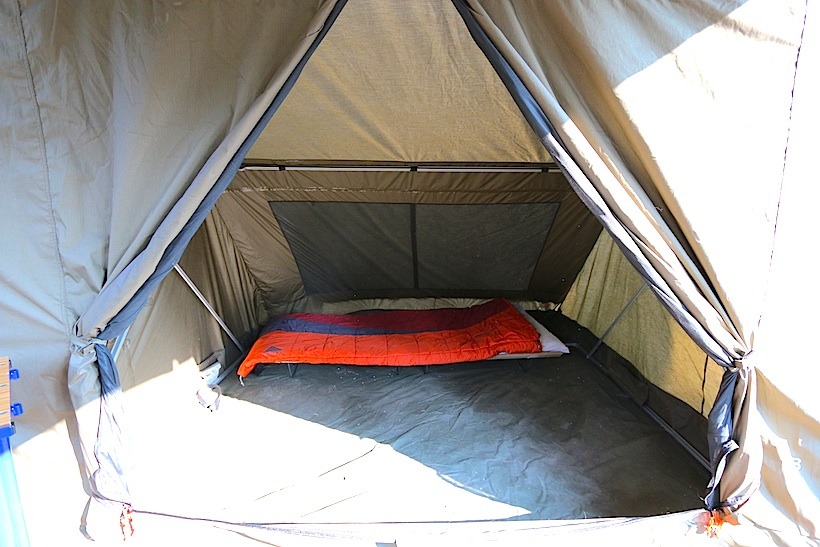
Set up time, ease and stability- Set up probably took twice as long as an RTT. The marketing says “a 30 second tent”. I beg to differ and had it dialed all in, at around 3 minutes once I’d taken it off the roof rack and pegged out all the corners. Not a big deal, but reality. This time does not include putting up the awning, which took another couple of minutes. I didn’t use the side-panels, if I had, set-up time probably would have doubled. It was fairly easy to set up on my own, but two people would have made it a breeze. This is something actually stated in the set up manual. Once erect, the tent was stable and I could see it easily handling a strong wind with the application of guide ropes. I didn’t experience any difficult weather, so never used them on the tent body, only on the awning. The build quality and materials used in construction (high-quality waterproof 8 Ounce Rip-Stop Poly-Cotton Canvas, taped waterproof seems, YKK zips, quality window/door mesh and heavy-duty heat-sealed PVC floor) are rugged, and I fully expect it will easily stand up to the abuse we’ll put it through over the next 6 months. I particularly like the fact that the entire rear of the tent rolls up, it has openings on both sides and a mesh front door. All this gives great ventilation.
Comfort- I’m used to sleeping on a mattress in an RTT. For the OZ-Tent, I used a basic fold away cot from REI, which was really comfortable. I’d even go as far as saying that I was more comfortable than any of my nights in the RTT’s we’ve used.
Size- The tent is named RV-5, which hopefully doesn’t indicate it’s made to hold five people? In my opinion, three people on cots (and a dog), would be cozy but doable. As I mentioned, I have the side and front panels to the awning. If I’d used these, it would have created a lot more livable (as well as sleeping) space and a dry sheltered area to cook and get out of any weather. I like this addition that can be added when needed.
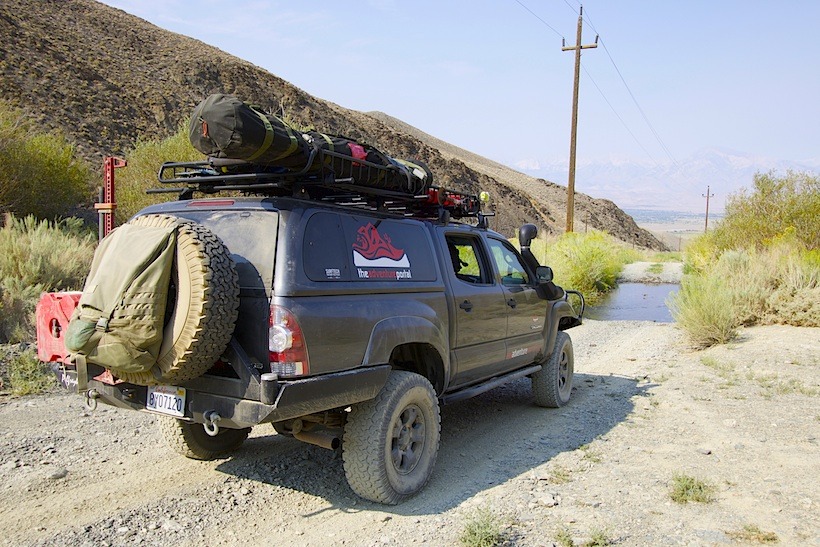
So, what didn’t I like?- The OZ Tent was too large to fit in the bed of my Tacoma with all my other gear, so every day I had to load it on the roof rack and strap it down. This concerned me when going through tight tree lined trails, which I did a fair amount of. I was also concerned about the potential of theft. I used Yakima locking cables to ease my mind on this matter. Of course, this is a personal issue based on my own vehicle choice and will not be relevant to everyone. I also had some sticker shock with the RV-5 coming in at $1100 and the additional deluxe side and front panels adding another $500. At this price it’s right up there with the RTT’s. However, having used it for a week, I can see how the innovative design and quality construction justifies the price.
TAP’s 12 month OZ-Tent Up-Date:
We’ve spent many nights in the Oz-Tent over the last 12 months and thought we’d up date our thoughts.
We had the annex set up and the tent securely fastened. Big storm came in and we stayed dry and warm.
Pros: The quality and the build of this tent is excellent. It is also a well thought out design that simply works. It has held up to a fair amount of abuse and still looks new. We’ve used it in 50+ mph winds and torrential rain and have yet to see any leaks or worry about it collapsing in a storm (There are multiple tie/stake down points). We also, used the additional annex throughout a fairly significant storm recently and that too came through with flying colors. The annex is sizable and a great place to hang out when the weather closes in. The travel bag is beginning to show signs of wear, but honestly I’m not surprised as it’s been on the roof of our rigs through sun, dust storms, rain, wind and low hanging branches. The zips on bags are a pet peeve of ours as we often see them fail. Not this one. Tough!
Cons: It’s heavy and taking it off and on a roof rack on a lifted rig gets tiresome. Also, it always needs locking on the roof, as we are never prepared to take the risk of leaving a $1500 tent simply strapped to the roof when we were off somewhere. As previously stated, don’t believe the marketing hype….it’s not a 30 second tent. By the time you take it off the roof, get it out the bag, stake it out and erect it, it’s more like 4 mins +. Not a big deal, but be prepared for reality. Finally, they call the RV-5 a 5 man tent. We beg to differ, as 5 people would be a real crush. In our opinion the RV-5 fit two adults really comfortably with a sense of room. 3 adults on small cots is also fine, but no room to move around. 5 people crushed in together and too close for comfort, maybe, but not for us.
Conclusions: The buyer has to decide whether they want the convenience of a RTT or the extra size and space of the Oz-tent. Quite honestly sleeping on a cot in the Oz-tent, is more comfortable than any RTT mattress we’ve slept on. However a RTT is less effort to set up. Overall, we’ve been impressed with this set up and can genuinely recommend this product as an excellent overlanding camp choice.
The Adventure Portal reached out to Jake Quinones of New Mexico Backroads (NMBR) to find out a bit about who he is, what he does and why he does it. Whether you are a novice overlander or a highly experienced adventurer, NMBR has an over land or off-road expedition for you. Here’s your chance to TAP into it. Check out his story and the services he provides:
Camino Del Tesoro-New Mexico Backroads
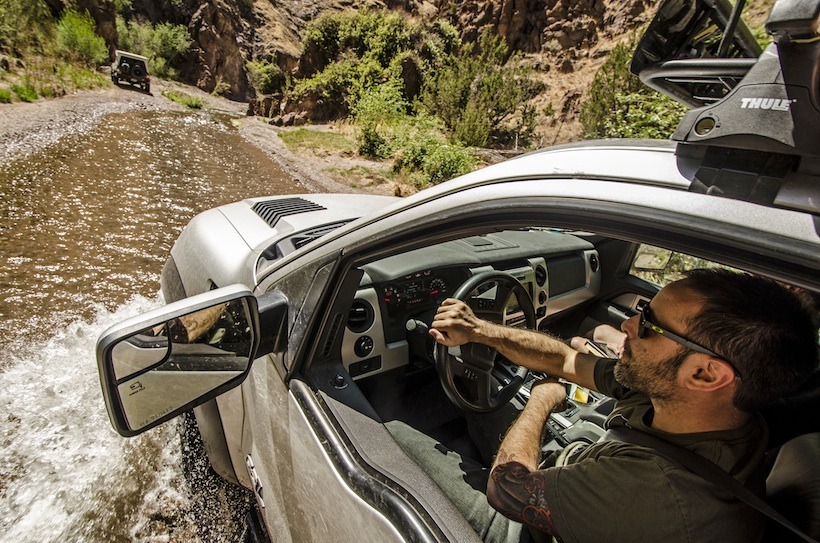
What New Mexico Backroads does: “Each year I log over 15,000 miles in the New Mexico Backroads Rubicon traveling the off-road backroads of New Mexico, Colorado, Utah, Arizona and Texas photographing, scouting, training and guiding for a host of assignments and unique individuals. Whether it’s a leading a multi-million dollar treasure hunt along the Rio Grande, photographing wildland fire crews battling flames in the Black Range or scouting along US/Mexico Border near Big Bend, all of it centers on driving where pavement does not exist. The NMBR Rubiconserves as my transport, base camp and office for everything I do in the field.
Jake organizes guided overland adventures and offers small (1 to 2 vehicles) or large custom overland expeditions tailoring the trips to his clients and creating an itinerary for each of the participants. He also offers pre-planned off-road guided events. After a trip is requested, Jake sends a registration packet to the attendees. Everyone must answer questions regarding their level of experience and the type of vehicle they drive. He basically offers a tutorial before the trip commences which consists of an extensive dialogue regarding how to prepare for the trip, what to expect and a list of essential and recommended supplies, equipment and gear. He provides advice, tips and tricks to help manage the terrain and any obstacles they may encounter. Creating an itinerary and assessing the needs of the adventurers on both custom trips and preplanned expeditions is essential to Jake. Jake’s philosophy as a offroad guide and vehicle supported adventure scout is that too much information and preparation is always better than not enough.
For the novice adventurer, Jake and New New Mexico Backroads, provides small session trainings and technical advice on how to best handle the various types of terrain to be encountered on the expedition. For the more experienced adventurer, his goal is to provide them with a self-sufficient guided expedition (or other 4WD adventure) that challenges and prepares participants for their future 4WD based endeavors. Jake’s tagline here is to: Go Boldly, Prepared and with Confidence.
Where he comes from: “I am a New Mexico native and have been familiar with backcountry travels since childhood. Some of my earliest memories include riding shotgun in my Dad’s Bronco while traversing the Gila National Forest, and sleeping under the stars in Denali National Park. As a youth, my passion for adventure grew as I wandered the mountainous desert of Southern New Mexico via mountain bike; capturing the landscape with my prized Nikon [film] camera.”
“These solo adventures provided the framework for my desire to explore the outdoors while documenting the journey. During college, I worked at Vermejo Park Ranch [Ted Turner’s 900-plus square mile ranch in northeastern New Mexico and southern Colorado] where my pursuit of an adventure based career was ignited. At the ranch, my duties ranged from bartending to patrolling and maintaining the various high-country lakes via backroads. This is where I cut my 4WD teeth and learned the fundamentals of off-road driving and vehicle recovery through trial and error. I’ll never forget the day I walked until dusk to find help after getting stuck. After receiving a degree in Hospitality and Tourism from Texas Tech in 2006, I returned to New Mexico and started working for my family’s construction company. In the coming years I spent the majority of my free time building a Toyota 4Runner and exploring the Southwest.”
Jake on Growing New Mexico Backroads: “After three years, a slew of mechanical failures, a dozen or so self-recoveries, and thousands of miles of scouting trails and backroads, I started New Mexico Backroads in 2009.”
“New Mexico Backroads was founded on my knowledge of backcountry, photography skills, technical driving skills, mechanical skills, and hospitality/service jobs background.”
“Six years later, NMBR services have expanded to include: adventure and landscape photography [for commissions, prints, digital media & publication], photojournalism [including wildland fire, US/MEX Border and other high-risk assignments], outdoor location scouting for film productions and commercial photography, overland expedition, and rock crawling guiding services [for New Mexico, Arizona, Colorado, Utah and Texas] as well as off-road driving and vehicle recovery skills training.”
“The best part of my job aside from driving a Jeep on dirt, it’s the friendships and stories made along backroads. I meet some truly incredible people through NMBR—be it those I guide, work with or cross paths with in the wild. The personalities are as unique as the scenery; adventurists, nomads, ranchers, lawmen, vaqueros, and locals—all pursuing their passions or livelihood off the grid.
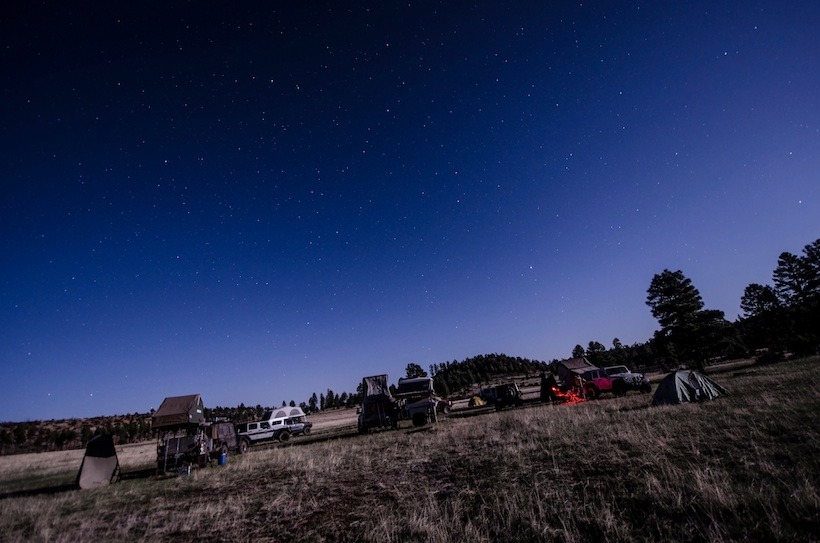
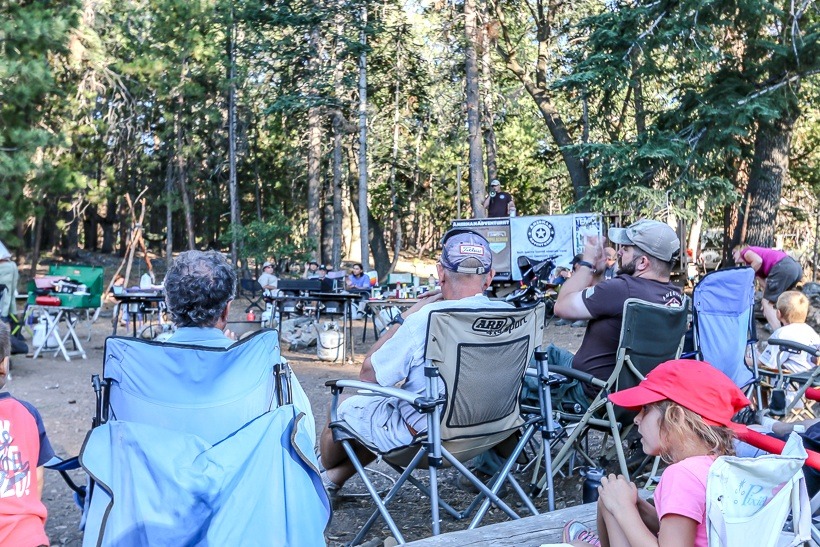
From August 28-30th the TAP team headed up to Camp Tahquitz near Big Bear CA to take part in American Adventurist’s 5th Annual SoCal Mountain Rendezvous. This event brings together a friendly community of rugged off-road and overlanding enthusiasts, gear heads, vendors…adventure lovers. American Adventurist is a non-profit community based forum that is geared toward the adventure travel enthusiast. There was a $40 donation per vehicle with 120 spots available. The proceeds were donated to the Boy Scouts of America.
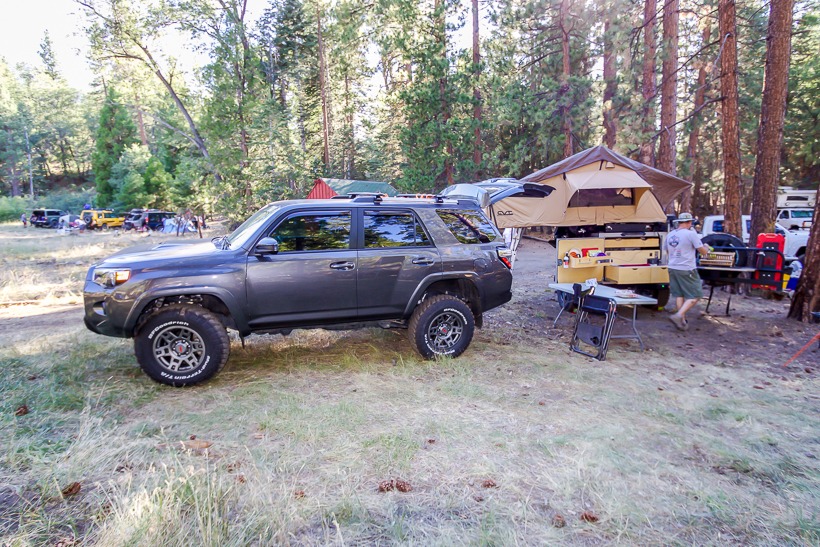
One of the “Base Camps”
Upon arrival, we encountered a number of familiar faces, smiles and a mecca of rigs. The atmosphere was one of camaraderie and fun. Everyone had their gear out in full regalia and it was great wandering around checking out the different set-ups and rigs. We also had a chance to touch bases with vendors who cater to the overlanding market. This was not a commercial event; no booths or tables full of swag. It was a social networking event that gave everyone a chance to talk about what they do, where they have been, what products they produce, or the services they provide. No commercials, just good company, good people doing what they love to do. On their site, the American Adventurist notes that, “this is an informal community gathering designed so that members of American Adventurist and other groups can meet each other in person”. This is a family friendly event and there were loads of kids running around playing and dogs getting lots of attention. On Saturday, there was a big potluck and a Dutch Oven cooking competition. The apple cobbler won. It was amazing. They have a raffle after the potluck with items provided by many of the participants of the event, companies that produce gear for overlanders and adventurers.
Founder of American Adventurist, Dave Bennett’s rig
Good Times: potluck and raffle
All in all, I have to say that this was a genuine, feel good, community event that is most definitely TAP recommended. Dave Bennett, founder of American Adventurist has provided the overlanding community a great platform for friendship, exploring, networking and fun. Many Thanks!
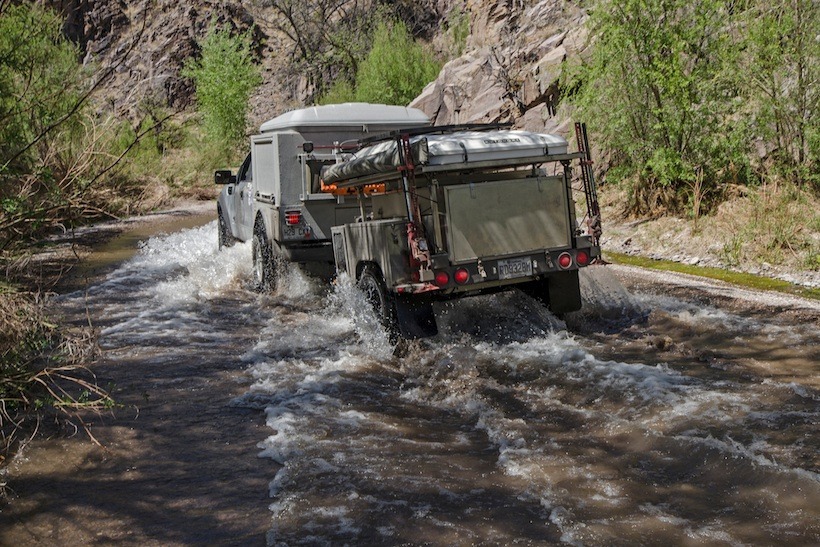
You have read about Leitner’s Pinzgauer in our Rig of the Month section, and the off – road trailer engineered and constructed by Bernhard Leitner of Leitner designs. Now check out this video of his trailer in action.
Video courtesy of Bernhard Leitner of Leitner Designs Tunes: “Joy Ride” by The Killers (Google Play-AmazonMPS-iTunes)